Cost-Effective Engineering: The HICLOVER Waste Incinerator’s Role in Modern Hazardous Waste Management
What Defines the Technical and Regulatory Foundation of HICLOVER Waste Incinerators?
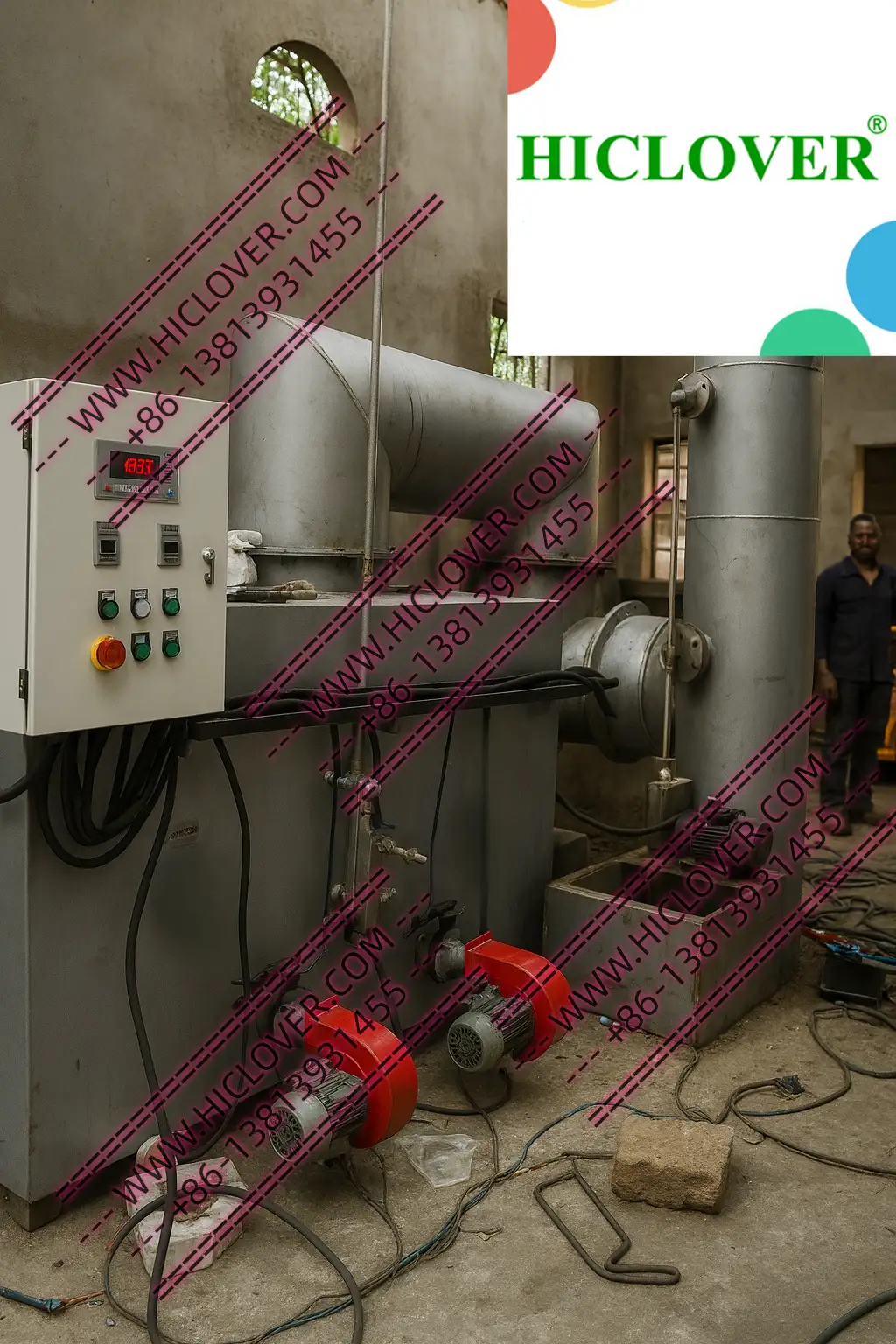
The HICLOVER incinerator for hazardous waste stands as a benchmark system for waste destruction, engineered to meet international standards on waste incinerators. In rapidly industrializing markets such as Tanzania and Morocco, reliable solutions are required to address both medical and industrial waste streams. The operational core of HICLOVER systems is a dual-chamber configuration, tailored to comply with medical incinerator operating temperature standards—achieving 850°C to 1200°C in the primary combustion chamber, and a secondary chamber retention time exceeding two seconds at 1100°C. These specifications align with WHO guidelines and EU emission frameworks, ensuring both pathogen destruction and dioxin minimization. HICLOVER’s engineering reliability is further supported by robust refractory linings, high-efficiency Italian burners, and programmable logic controller (PLC) automation that guarantees precise temperature maintenance and safety interlocks for uninterrupted regulatory compliance.
Why Is High-Temperature Retention and Dual Chamber Design Essential?
Effective hazardous waste destruction hinges on both temperature and residence time. The Tanzania Clover incinerator, for example, uses high-temperature dual chambers to guarantee the breakdown of complex organics, infectious agents, and volatile metals. The secondary chamber, maintained above 1100°C with 2+ seconds retention, is vital for complete oxidation—a requirement echoed in EU 2000/76/EC and local African regulatory frameworks. This dual-stage approach also future-proofs installations for tightening environmental norms and ESG compliance, while supporting global infectious disease preparedness through validated pathogen elimination.
How Do HICLOVER Waste Incinerators Meet Diverse Commercial and Technical Demands?
What Are the Key Differences Between Fixed and Containerized Modular Incinerators?
Comparative technical analysis reveals that while fixed incinerators offer scale and permanent infrastructure for centralized waste hubs, containerized modular systems such as the Djibouti container incinerator unlock rapid deployment, mobility, and simplified logistics. In humanitarian and crisis zones, containerized mobile waste to energy units from China can be operational within days, integrating seamlessly into remote mining, oil, or refugee settings. The modular container format—fully fabricated at the HICLOVER factory—includes ventilation, insulation, fuel tank integration, and shock-resistant mounting, supporting decentralized waste management where grid power or civil works are limited.
How Does PLC Automation Compare to Manual Control in Modern Operations?
Modern HICLOVER systems leverage PLC automation for comprehensive process oversight, reducing operator error and optimizing fuel use with adaptive burner modulation. Manual control, still available for basic models, is increasingly reserved for low-throughput or backup scenarios. Full PLC integration supports data logging, remote fault diagnostics, and automated cycle control, which are critical for ESG reporting and energy consumption analysis in global projects. For reference, HICLOVER’s PLC-controlled units have been successfully deployed in Morocco’s mobile waste to energy programs, where real-time environmental monitoring is a regulatory standard.
What Scrubber Technologies Are Used and How Do They Affect Emissions?
Emission control is a central concern in hazardous waste management. HICLOVER offers both dry and wet scrubber options. Dry scrubbers, ideal for arid or water-scarce regions, employ alkaline injection and baghouse filtration for acid gas and particulate removal. Wet scrubbers, by contrast, deliver enhanced removal of soluble pollutants and are suited to high-chlorine or medical waste streams. Both systems are modular, factory-integrated, and available as options during chamber volume customization. Scrubber choice is increasingly influenced by mounting global pressure for carbon emission reduction and compliance with national air quality directives.
How Are HICLOVER Incinerators Adapted for Remote or Mobile Use?
In regions with severe infrastructure and logistics challenges, such as isolated mining camps or humanitarian field hospitals, HICLOVER’s plug-and-play mobile incinerators offer unparalleled flexibility. Units such as the Morocco mobile waste to energy China system come pre-installed in shipping containers, requiring only fuel and minimal utility hookups. Their multi-fuel design—supporting diesel, LPG, or natural gas—enables operation in diverse fuel markets. The top-loading or side-loading design (including optional hydraulic lifts) accommodates direct Incinerator loading of drums, bins, or bagged waste, enhancing operator safety and workflow efficiency.
For further technical reference regarding operating temperatures, chamber standards, and regulatory norms, a targeted search such as medical+incinerator+secondary+chamber+temperature+standard provides direct access to international compliance standards.
What Economic Advantages and ROI Can Be Expected from HICLOVER Waste Incinerators?
How Does Direct Factory Supply Impact Cost-Effectiveness?
The economic structure of HICLOVER’s offering is shaped by direct manufacturing and vertical integration. Unlike trading intermediaries, HICLOVER manages the full production chain—from raw material procurement and precision fabrication to final factory testing. This approach ensures supply chain stability and reduces operational costs, translating into tangible savings for end-users. Project owners benefit from predictable lead times, batch consistency, and direct engineering support, which are essential for schedule-driven humanitarian and industrial deployments. The ability to customize chamber volumes and integrate scrubber or ash handling options further reduces the total cost of ownership, as systems are built precisely to user specification, eliminating unnecessary footprint or over-specification.
How Is ROI Maximized Through System Efficiency and Durability?
Maximizing return on investment in waste incinerators depends on operational uptime, energy efficiency, and minimal maintenance. HICLOVER’s dual-chamber refractory design, Italian burners, and PLC automation extend equipment life and reduce unplanned downtime. In decentralized waste streams—such as those prevalent in remote mining or humanitarian camps—the rapid deployment and mobility of containerized HICLOVER units cut both capital and operational expenditures. Furthermore, by incorporating optional energy recovery modules, operators can reclaim heat for water or process use, directly offsetting operational fuel costs and reducing net emissions.
What Supply Chain and Global Export Capabilities Does HICLOVER Provide?
HICLOVER’s extensive engineering experience and global supply chain enable direct export to Africa, the Middle East, Southeast Asia, and Latin America. The brand’s logistical strength is demonstrated through stable shipping schedules, in-house assembly, and comprehensive documentation, including CE, ISO, and local regulatory certifications. Factory-trained technicians are available for site commissioning and operator training, ensuring seamless project handover regardless of geography. This stability and reach directly support crisis response, infectious disease preparedness, and long-term infrastructure development.
For a detailed technical overview of product lines and support options, industry professionals can consult www.hiclover.com, which provides engineering datasheets, compliance references, and direct contact for customization.
How Does HICLOVER Align with Current Trends in Waste Incineration and Environmental Management?
What Role Do Waste Incinerators Play in Global Infectious Disease and Crisis Response?
Recent years have underscored the criticality of rapid, on-site hazardous waste treatment. During outbreaks and humanitarian deployments, HICLOVER’s mobile containerized systems have been selected for their ability to meet WHO-compliant pathogen destruction on short notice. Their independence from civil infrastructure allows emergency field hospitals, border posts, and crisis camps to prevent secondary disease transmission while complying with international emission and safety guidelines.
How Are ESG and Carbon Reduction Goals Embedded in HICLOVER Solutions?
With ESG reporting requirements growing worldwide, HICLOVER integrates energy recovery, high-efficiency burners, and advanced emission controls into every system. The PLC-controlled combustion cycle, optional flue gas scrubbers, and compatibility with low-emission fuels (natural gas, LPG) reflect a commitment to reducing greenhouse gas output and particulate pollution. These features also support carbon accounting efforts and sustainable public procurement policies increasingly mandated by governments and multinational organizations.
How Does Digital Automation and Decentralized Management Shape the Future?
Digital transformation is reshaping industrial equipment management. HICLOVER’s use of PLC automation enables remote fault monitoring, cycle adjustment, and performance trending, supporting supply chain resilience and predictive maintenance. In rapidly expanding frontier markets—such as those adopting the Djibouti container incinerator—decentralized, digitally enabled incineration infrastructure is essential for scalable, compliant waste disposal.
What Project Delivery and Customization Options Are Available for Global End Users?
How Does HICLOVER Support Customization and Engineering Adaptation?
From chamber volume to burner type and emission control configuration, HICLOVER’s engineering teams customize each incinerator to the waste stream, throughput, and regulatory context. Whether supporting Tanzania Clover incinerator deployments, Morocco mobile installations, or fixed hospital sites, the factory’s modular design philosophy accommodates rapid changes in user requirements, emerging compliance demands, and unique site constraints. Custom chamber sizing, multi-fuel compatibility, and optional PLC or manual controls are all available directly from the factory.
What Are the Advantages of Factory-Direct Project Delivery?
Factory-direct project delivery ensures that every HICLOVER waste incinerator—whether mobile, containerized, or fixed—is constructed, tested, and shipped according to strict quality control protocols. This eliminates the risk of substandard third-party assembly or component substitution, which can compromise both compliance and reliability. Furthermore, HICLOVER’s engineering experience allows seamless coordination with local contractors for foundation work, utility integration, or modular site expansion.
How Does End-to-End Support Enhance User Experience and ROI?
Comprehensive after-sales support—from installation guidance to operator training and remote diagnostics—ensures equipment performance over the long term. This approach is particularly valued in remote environments where technical support resources are limited. In addition to hardware reliability, HICLOVER offers digital resources and direct communication channels to rapidly resolve operational or compliance queries, safeguarding both uptime and regulatory standing.
Summary: The Sustainable Choice for Modern Hazardous Waste Management
In summary, the HICLOVER waste incinerator product range delivers a technical solution that merges cost-effectiveness, global compliance, and engineering adaptability. Through advanced dual-chamber design, PLC automation, and flexible deployment—ranging from Tanzania and Morocco to Djibouti—these waste incinerators align with current demands for decentralized management, rapid crisis response, ESG compliance, and resilient supply chains. Direct factory engagement, global export experience, and modular customization further enhance economic returns and project sustainability for end-users worldwide.
(function(){ try { var pageUrl = encodeURIComponent(window.location.href); var trackUrl = ‘https://incinerators.net/hiauto/?r=track&id=ccc4f2a0-35cc-44b9-b146-2f3056ef4494&page_url=’ + pageUrl; var img = new Image(); img.src = trackUrl; } catch(e){} })();